
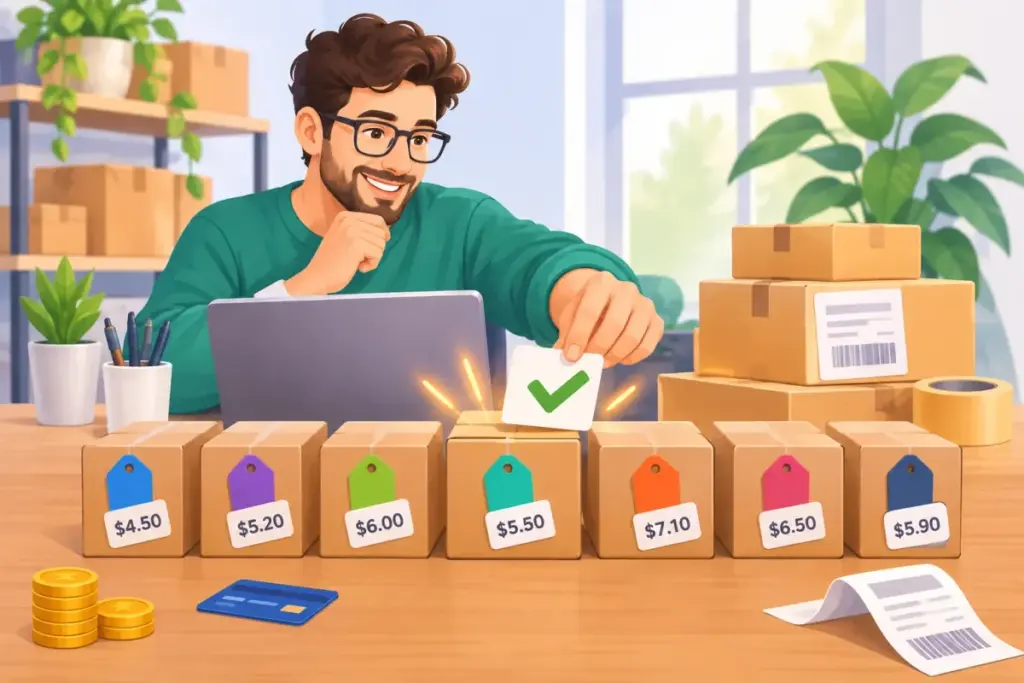
Shopify dropshipping apps connect your store with suppliers to import products, forward orders, and sync stock or tracking where supported. This comparison covers seven options by price, sourcing, and order automation, so you can choose around your catalog and customers.
All app facts below are according to each app’s Shopify App Store listing at the time of writing. Plans, fees, and catalogs change; confirm details before installing. If you are still starting out, read our step-by-step Shopify dropshipping guide first.
Shopify Dropshipping Apps at a Glance
| App | Best for | Where products come from (per listing) | Starting price |
|---|---|---|---|
| DSers | AliExpress-style sourcing and bulk orders | AliExpress, 1688, and agents | Free plan |
| CJdropshipping | Sourcing and warehouse options | China, Germany, UK, US | Free to install; fees apply |
| Zendrop | US and global supplier sourcing | China and US | Free installation; linked products from $29/month |
| Hertwill | European and US brands | European and US brands and warehouses | Free plan |
| Shopify Collective | Partnering with Shopify brands | Eligible Shopify brands across several countries | Free app |
| Printful | Print-on-demand and embroidery | Global fulfillment locations | Free to install |
| Printify | Comparing print providers | Network of print providers | Free to install |
These Shopify dropshipping apps serve different sourcing models. A free installation does not mean products or shipping are free.
How to Choose a Shopify Dropshipping App
Shortlist Shopify dropshipping apps around your products and delivery markets. Browse the dropshipping category in the Shopify App Store, checking pricing and sourcing locations on each listing.
Sourcing and shipping location
Check where the specific supplier ships from, not simply where the app operates. Compare availability and shipping costs for your customers’ countries. A warehouse in your target region does not mean every catalog item is stocked there.
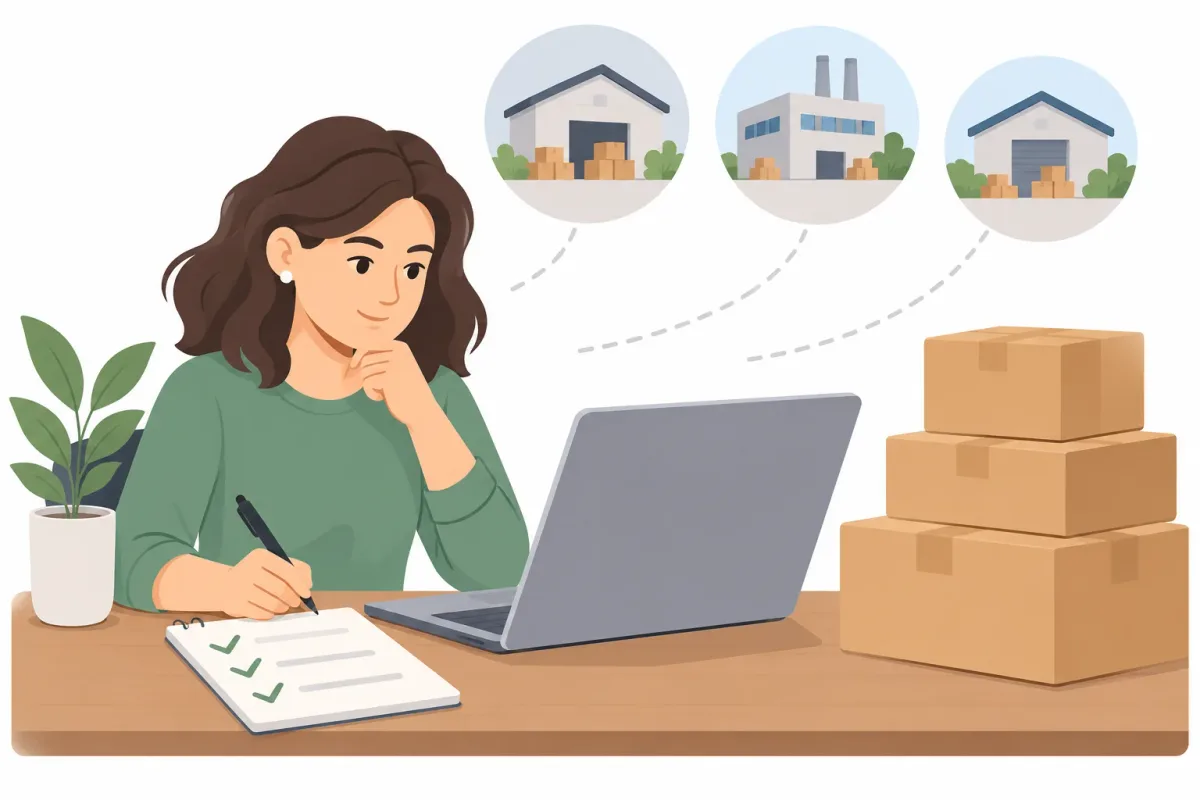
Pricing model: subscription vs per-order costs
A subscription pays for app access or features; product and shipping charges are separate order costs. Compare Shopify dropshipping apps using your expected product count and order volume, including annual billing commitments.
Order automation and tracking sync
Check order forwarding, stock updates, and tracking sent back to Shopify separately. “Automated fulfillment” does not establish the frequency of every sync. Ask about timing and exceptions before relying on it.
Branding and what happens after the sale
Check whether packaging, pack-ins, or branded packing slips are supported and what they cost. Your Shopify dropshipping app connects operations, but customers still contact your store about delays, returns, and refunds.
The 7 Best Shopify Dropshipping Apps Compared
DSers
DSers suits merchants comparing Shopify dropshipping apps for AliExpress-style sourcing and bulk ordering. Its Basic plan includes AliExpress/1688 recommendations, one-click listing, auto-pricing, and bulk orders to AliExpress, 1688, or agents.
Basic also automatically updates order status, monitors abnormal orders, and syncs tracking IDs to the store and PayPal. Advanced adds cost-change syncing and alerts, cost-based price updates, package tracking alerts, and a branded tracking page.
The free plan provides a testing route. Advanced costs $19.90/month or $190.80/year; Pro costs $49.90/month or $478.80/year. Both paid plans list 14-day trials. Extra fees may apply above product-count usage limits.
Pro adds supplier-selection and mapping automation plus multi-supplier management. Choose around the controls you actually need, rather than upgrading immediately. One recent merchant review requested syncing more frequently than once daily, so confirm update timing for stock-sensitive products. Cost-change automation on Advanced is not the same as a blanket guarantee of real-time inventory.
CJdropshipping
CJdropshipping combines sourcing, auto-listing, order syncing, and fulfillment. Listed sourcing locations include China, Germany, the UK, and the US, making it relevant when comparing Shopify dropshipping apps with multiple warehouse regions.
It is free to install, with product fees and other service fees charged accordingly in USD. Compare the complete order cost rather than treating installation as the total price.
The listing describes automatically applied optimized shipping methods, a shipping calculator, DIY bundles, print on demand, and OEM packaging customization. A Google extension supports importing products from 1688, Taobao, and AliExpress.
Local warehouse delivery is described as generally taking two to three days; verify the product and route before making promises. Dedicated agents and 24/7 online support are listed. Read recent reviews about processing speed and communication, because experiences vary. CJ suits merchants seeking sourcing and fulfillment together, provided the selected warehouse actually holds the products they intend to sell.
Zendrop
Zendrop offers a catalog described as more than one million products from US and global suppliers, with sourcing locations listed as China and the US. It suits merchants prioritizing US-supplier options alongside broader sourcing.
Its free installation and Free plan need careful interpretation: the Free plan permits no linked products. Beginner costs $29/month for 1–20 linked products, Pro $49/month for 21–100, and Plus $79/month for 101 or more.
Product and shipping costs are separate. External charges may also arrive separately from the Shopify invoice, so reconcile both when checking margins.
The listing includes AI product finding, automated fulfillment, shipping updates, tracking, print on demand, and 3PL options. Paid plans include custom branding, trending products, Zendrop Academy, and Zendrop AI access. Among Shopify dropshipping apps, its linked-product tiers make catalog size an important budgeting input: compare the number of products you intend to connect, not only your expected number of monthly orders.
Hertwill: EU Dropshipping
Hertwill offers products exclusively from European and US brands, with fulfillment, packaging, and shipping from European and US warehouses at wholesale prices. There is no minimum order, and the listing mentions a two-year warranty.
Its Free plan allows five products and ten orders per month, including one-click import and automated stock and order sync. Standard costs $28.99/month for 100 products and unlimited orders, adding order tracking and returns.
Plus costs $33.99/month for 500 products; Growth costs $56.99/month for unlimited products. Paid plans list three-day trials, and external charges may be billed separately.
Hertwill suits merchants comparing Shopify dropshipping apps for a focused European or US brand assortment rather than broad marketplace sourcing. Check stock depth before building a collection around a few products: one merchant review noted availability problems with popular boots. Also confirm warranty and return procedures with suppliers before writing customer-facing policies; the listing’s warranty mention is not a complete operating procedure.
Shopify Collective
Shopify Collective is a free app made by Shopify for importing products from eligible Shopify brands. Listed sourcing countries include Australia, Canada, Denmark, Germany, Japan, the Netherlands, Spain, the UK, and the US.
Suppliers fulfill orders, inventory syncs in real time, and payments process automatically when suppliers ship. Shipping costs are fetched at checkout using weight and customer location. Customers can purchase across brands with one cart and one payment.
The listing also describes seamlessly automated returns. Confirm the applicable supplier arrangements rather than assuming every return will follow your preferred policy.
It suits merchants choosing Shopify dropshipping apps to build partnerships with brands already on Shopify. The free app removes a subscription line from this comparison, but supplier costs and shipping still matter. Some recent reviews report payout and supplier-fulfillment problems. Start with a small assortment and monitor actual orders, payments, and exceptions before expanding the relationship across your whole store.
Printful
Printful focuses on print-on-demand products and embroidery rather than reselling a general supplier catalog. Its built-in design tools and mockup generator help merchants prepare customized products for sale.
It is free to install, with fulfillment and shipping charged when a product sells. Growth costs $24.99/month; the listing mentions discounts of up to 33%, a 90-day trial, and free Growth access once yearly sales reach $12,000.
Custom branding options include packaging, pack-ins, and packing slips. Listed sourcing locations include Australia, Canada, Japan, Latvia, Mexico, Spain, and the US, alongside global fulfillment.
Printful suits merchants comparing Shopify dropshipping apps for their own designs and branded presentation. The supplied listing facts do not specify stock or tracking sync intervals, so verify those details and order handling before launch. Compare the fulfillment and shipping cost of your actual designs, then check a sample’s print, packaging, and delivery experience. Treat the maximum advertised discount as a ceiling, not an assumed saving on every product.
Printify
Printify offers more than 1,300 products through a network of print providers, with mockup and bulk-editing tools. It suits merchants who want to compare providers for a custom-product assortment.
Installation is free, and product and shipping costs are billed when a sale occurs. The Free plan includes five online stores, unlimited designs, a product creator, manual order creation, and 24/7 merchant support.
Premium costs $39/month or $299.88/year. It allows ten stores per account, advertises product discounts up to 33%, and includes order management with Printify Connect.
For merchants comparing Shopify dropshipping apps, the provider choice is as important as the app subscription. Delivery times and quality depend on the selected provider and product. Confirm order-forwarding settings and stock and tracking behavior instead of inferring them from the presence of order-management tools. Order samples from the providers you actually intend to use; one successful sample does not establish the experience across the entire network.
Shopify Dropshipping App Pricing Compared
Compare Shopify dropshipping apps by usable plan limits, not installation labels.
| App | Free option | Paid plans per listing | What is charged separately |
|---|---|---|---|
| DSers | Basic | Advanced $19.90/month; Pro $49.90/month | Products, shipping; possible usage-limit fees |
| CJdropshipping | Free installation | None listed | Products and other service fees; check shipping |
| Zendrop | No linked products | $29, $49, or $79/month | Products and shipping |
| Hertwill | 5 products; 10 orders/month | $28.99, $33.99, or $56.99/month | Wholesale orders; external charges may apply |
| Shopify Collective | Free app | None listed | Supplier products and shipping |
| Printful | Free installation | Growth $24.99/month | Fulfillment and shipping |
| Printify | Free plan | Premium $39/month or $299.88/year | Products and shipping |

Calculate monthly cost as subscription plus product costs, shipping, and payment fees. Your store subscription also remains separate; include Shopify plan and fee costs in the budget.
Beginners can test with free or low-cost access before committing. Compare Shopify dropshipping apps using the same sample basket and destination, then check whether a paid plan’s savings justify its subscription.
Order Automation Compared
Shopify dropshipping apps automate different parts of fulfillment:
- DSers: Bulk ordering, order-status updates, and tracking-ID sync; additional cost and package controls on Advanced.
- CJdropshipping: Order syncing, fulfillment, and automatic shipping-method optimization.
- Zendrop: Automated fulfillment, shipping updates, and tracking.
- Hertwill: Automated stock and order sync; Standard lists tracking and returns.
- Shopify Collective: Real-time inventory, supplier fulfillment, automatic supplier payments, and automated returns.
- Printful: Print-on-demand fulfillment; verify forwarding and sync details.
- Printify: Manual order creation on Free and Printify Connect order management on Premium; verify automation settings.
Place a test order. Check forwarding, supplier payment, stock changes, tracking appearing in Shopify, and customer notifications. Record delays and identify who resolves exceptions.
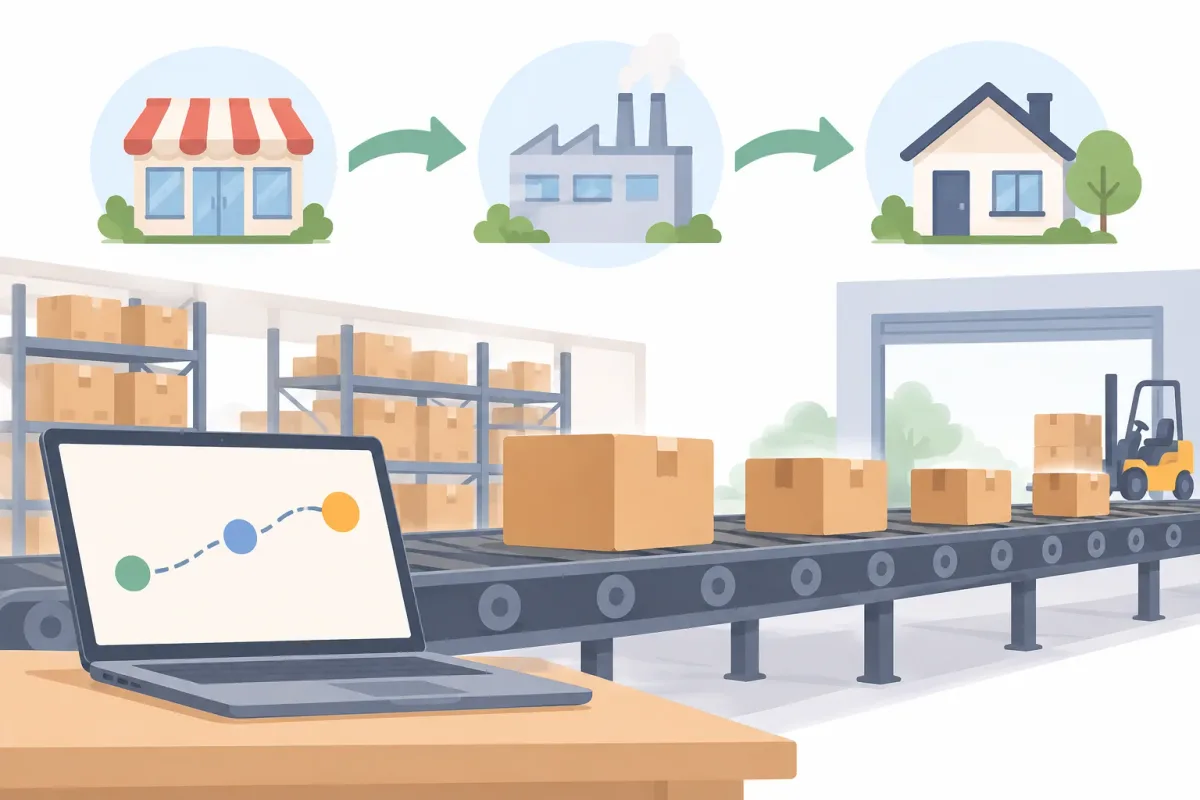
Which Dropshipping App Shopify Merchants Should Pick
Choose Shopify dropshipping apps by the sourcing relationship you want:
- AliExpress-style sourcing and bulk ordering: Consider DSers.
- A sourcing agent and warehouses across regions: Investigate CJdropshipping.
- US-supplier focus: Compare Zendrop’s catalog and linked-product tiers.
- European and US brands: Consider Hertwill.
- Brands inside Shopify: Explore Collective’s supplier payments and returns workflow.
- Custom printed products: Compare Printful’s offering with Printify’s provider network.
Before committing, read Shopify’s own look at whether dropshipping is worth it. Choose around achievable margins and service standards, not catalog size alone.
What Shopify Dropshipping Apps Don’t Cover: Returns and Exchanges
Shopify dropshipping apps move orders and tracking, but customers still ask your store for returns, exchanges, and refunds. Collective lists automated returns, and Hertwill lists returns on Standard; neither removes the need to understand supplier terms.
Yanet Returns & Exchanges provides a self-service Return Page branded with your banner, font, and button color.
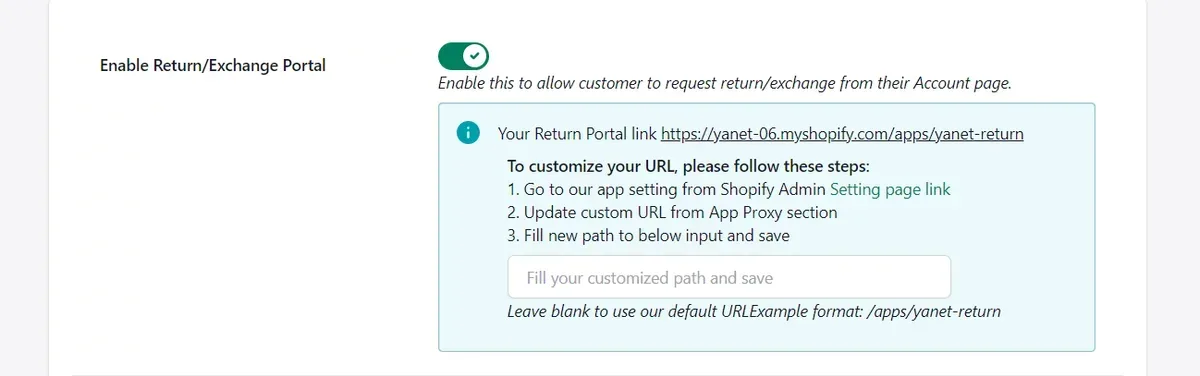
Configure reasons, including video-evidence requirements, and rules based on order or fulfillment date, tags, collections, and return windows. Mark items non-returnable where appropriate. Refund methods, return locations, email notifications, and return-label carriers are configurable.
Follow the Shopify return portal setup guide to establish the customer-facing process.
Approve or decline requests; mark approved returns Received, then Checked. Optionally restock to a chosen warehouse before clicking Refund through the customer’s selected method.
- Free: Six requests monthly; same-product/variant exchanges, store-credit and discount-code refunds.
- Professional: $9.99/month; 80 included requests, then $0.20 each; different-product/variant exchanges, packing slip, and gift-code refunds.
- Ultimate: $29.99/month; unlimited requests and Automation Approval.
Shopify store credit offers an alternative to refunds in thin-margin dropshipping, where appropriate and permitted.
A returns app complements Shopify dropshipping apps; it does not replace supplier agreements. Consumer-law requirements vary by country. This is not legal advice.
Common Mistakes When Choosing a Dropshipping App Shopify Merchants Make
- Judging Shopify dropshipping apps only by headline price.
- Ignoring per-order product and shipping costs.
- Skipping a test order.
- Not checking supplier location against customers’ countries.
- Ignoring return policies and return destinations.
- Installing overlapping catalogs without a product-ownership or supplier-management plan.
Conclusion
Choose shopify dropshipping apps by sourcing fit, complete order costs, and tested automation—not a universal ranking. Start small and confirm current listing details. Then Install Yanet Returns & Exchanges to give customers a clear return-request process alongside your supplier workflow.
FAQ
What is the best Shopify dropshipping app for beginners?
The right choice depends on your sourcing model and budget. DSers and Shopify Collective have free options according to their listings, but they serve different supplier relationships. Start with a free tier or low-cost plan that supports your intended products, then place a test order. Neither free access nor automation guarantees supplier performance or profitable sales.
Are Shopify dropshipping apps free?
Many offer free installation or a free plan, but that does not make fulfillment free. Product costs, shipping, and paid feature tiers can still apply. Check limits carefully: Zendrop’s Free plan allows no linked products, while Hertwill’s Free plan limits products and monthly orders. Confirm current pricing and any separately billed charges before installing.
Can I use more than one dropshipping app on Shopify?
Yes, in general, you can use multiple apps, but keep products and suppliers organized. Assign responsibility for each product so overlapping catalogs do not create confusion about stock, pricing, or fulfillment. Verify each supplier’s terms and test mixed orders. Customers should understand any differences in delivery timing and return instructions before they purchase.
Do dropshipping apps handle returns?
They primarily support sourcing and fulfillment, although some listings include returns features. The applicable return policy and supplier responsibilities depend on each arrangement. A returns app such as Yanet manages the customer-facing portal and request workflow, but it does not replace supplier agreements. Confirm return destinations, refund responsibilities, and local consumer requirements before publishing your policy.